Sit-Up: Muscles Worked and How to Do It
TL;DR
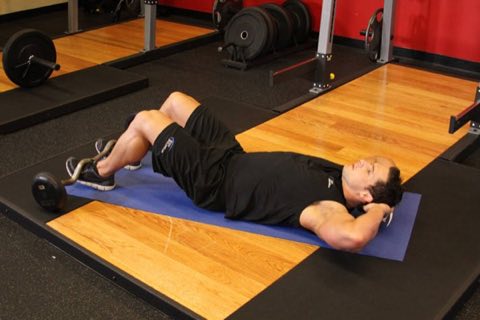
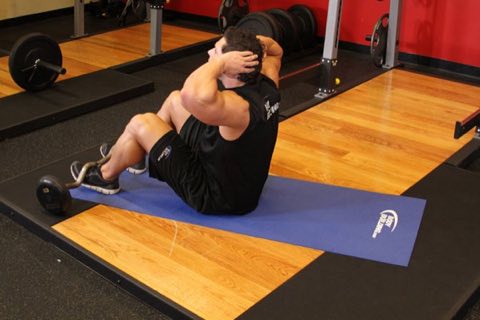
The sit-up is a classic abdominal exercise. Your abdominals contract to curl your torso up off the floor into a seated position, then control the descent back down. Anchoring your feet lets you move through a longer range than a crunch, working the muscle from hip to ribs.
- Primary muscle:
- Abdominals
Muscles worked
Your abdominals are the only muscle group the sit-up directly trains. They contract to pull your torso up off the floor into a seated position, working through a longer range of motion than a crunch since you travel all the way from lying down to upright.

Log Sit-Up in PR Streak
PR Streak's library has 873 exercises, each with photos and step-by-step instructions like this one. Log this move and see what you lifted last time right next to every set, with every PR caught automatically and a chart for every exercise.


How to do it
- Lie down on the floor placing your feet either under something that will not move or by having a partner hold them. Your legs should be bent at the knees.
- Place your hands behind your head and lock them together by clasping your fingers. This is the starting position.
- Elevate your upper body so that it creates an imaginary V-shape with your thighs. Breathe out when performing this part of the exercise.
- Once you feel the contraction for a second, lower your upper body back down to the starting position while inhaling.
- Repeat for the recommended amount of repetitions.
Form tips
- Bend your knees and keep your feet anchored under something stable or held by a partner.
- Curl up smoothly instead of yanking with your neck or arms.
- Exhale as you sit up and inhale as you lower back down under control.
- Keep your hands lightly behind your head instead of pulling on your neck.
Exercise details
| Equipment | Bodyweight |
|---|---|
| Level | Beginner |
| Mechanic | Isolation |

Used by lifters following PPL, 5x5, upper/lower, and more.
Frequently Asked Questions
Are sit-ups better than crunches for abs?
Sit-ups move your torso through a longer range than crunches, which some lifters prefer, but crunches isolate the abdominals more directly with less involvement from your hip flexors. Both are valid, and either works well for 12 or more reps for muscular endurance.
How many sit-ups should I do?
Since sit-ups are a bodyweight exercise, most people train them in the 12 reps or more range for muscular endurance. Try the crunch as an alternative if you want to isolate your abdominals more directly.
More abdominals exercises
Exercise instructions and photos come from the free-exercise-db library, public domain, the same library used inside the PR Streak app.
