Recumbent Bike: Muscles Worked and How to Do It
TL;DR
The recumbent bike works your quadriceps, which drive the downward push on each pedal stroke, while your glutes and hamstrings extend your hip and your calves finish the stroke through your ankle. The reclined seat supports your lower back, making it a joint-friendly way to train your legs.
- Primary muscle:
- Quadriceps
- Secondary muscles:
- Calves, Glutes, Hamstrings
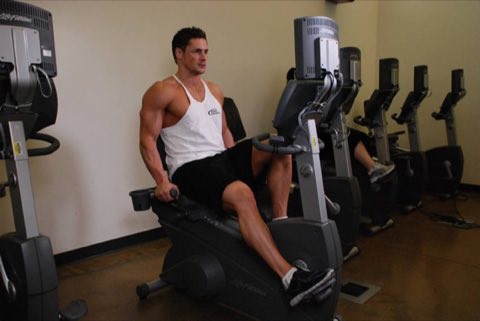
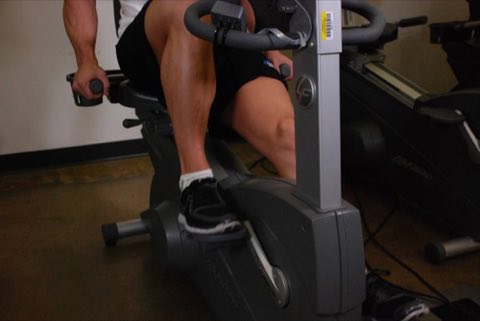
Muscles worked
Your quadriceps do most of the work on the downstroke, straightening your knee to push the pedal forward and down. Because the seat supports your torso, almost all the resistance you feel lands on the front of your thighs.
Your glutes and hamstrings extend your hip as your leg drives back and down through the stroke, working opposite the quads to keep the pedal moving smoothly through the full circle rather than just on the push.
Your calves point your ankle through the bottom of each stroke, adding a small but steady contribution as your foot completes the circle before the next push begins.

Log Recumbent Bike in PR Streak
PR Streak's library has 873 exercises, each with photos and step-by-step instructions like this one. Log this move and see what you lifted last time right next to every set, with every PR caught automatically and a chart for every exercise.


How to do it
- To begin, seat yourself on the bike and adjust the seat to your height.
- Select the desired option from the menu. You may have to start pedaling to turn it on. You can use the manual setting, or you can select a program to use. Typically, you can enter your age and weight to estimate the amount of calories burned during exercise. The level of resistance can be changed throughout the workout. The handles can be used to monitor your heart rate to help you stay at an appropriate intensity.
- Recumbent bikes offer convenience, cardiovascular benefits, and have less impact than other activities. A 150 lb person will burn about 230 calories cycling at a moderate rate for 30 minutes, compared to 450 calories or more running.
Form tips
- Adjust the seat so your knee has a slight bend at the furthest pedal point, not a straight leg.
- Push through the whole pedal stroke instead of only stomping down on each rotation.
- Keep your lower back against the seat pad rather than arching forward to reach the pedals.
- Increase resistance before increasing speed if you want more leg work per session.
- Keep your feet flat and secure in the straps or pedal cages if provided.
Exercise details
| Equipment | Machine |
|---|---|
| Level | Beginner |

Used by lifters following PPL, 5x5, upper/lower, and more.
Frequently Asked Questions
Does the recumbent bike work your glutes?
Yes. Your glutes work with your hamstrings to extend your hip on each stroke, though your quadriceps generally do more of the visible work driving the pedal down. Increasing resistance and pushing through the whole stroke, not just the downstroke, engages the glutes more.
Is a recumbent bike as good for your legs as an upright bike or squats?
A recumbent bike trains the same quadriceps, hamstring, glute and calf pattern as an upright bike, just with back support and less core demand. It's a solid option for cardio and light leg conditioning, but it doesn't load your legs as heavily as squats for building strength.
What's a good way to add strength work alongside the recumbent bike?
Pair recumbent bike sessions with a compound lower-body lift like the step-up or squat to build strength, and use the bike for cardio, warm-ups or recovery days between heavier leg sessions.
More quadriceps exercises
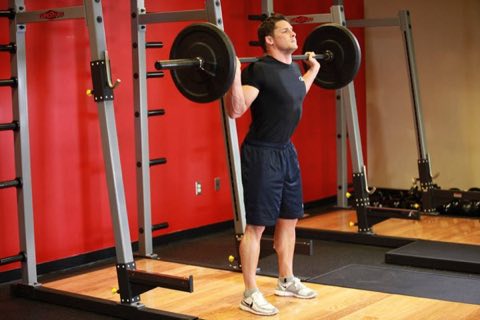
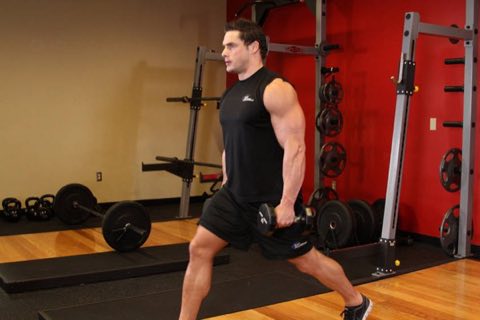
Exercise instructions and photos come from the free-exercise-db library, public domain, the same library used inside the PR Streak app.
