Rowing Machine: Muscles Worked and How to Do It
TL;DR
The rowing machine works your quads as the prime mover on the drive, with your glutes, hamstrings, lower back and middle back extending your hips and pulling the handle, while your biceps finish the pull and your calves drive off the footplate. It trains your legs, back and arms together.
- Primary muscle:
- Quadriceps
- Secondary muscles:
- Biceps, Calves, Glutes, Hamstrings, Lower back, Middle back
Muscles worked
The rowing stroke starts with the drive, where your quads do most of the work pushing your legs from bent to straight against the footplate, similar to a leg press. Your calves contract at the same time, plantarflexing your ankles to keep power moving through your foot straps.
As your legs finish extending, your glutes and hamstrings take over to drive your hips through, the same hip-extension pattern as a deadlift. Your lower back braces to keep your spine long and prevent rounding as you lean back slightly at the finish.
The final part of the stroke is the pull, where your middle back (rhomboids and mid-traps) draws your shoulder blades together and your biceps bend your elbows to bring the handle to your ribs. On the recovery, you reverse the sequence with control instead of momentum, resetting for the next stroke.

Log Rowing Machine in PR Streak
PR Streak's library has 873 exercises, each with photos and step-by-step instructions like this one. Log this move and see what you lifted last time right next to every set, with every PR caught automatically and a chart for every exercise.


How to do it
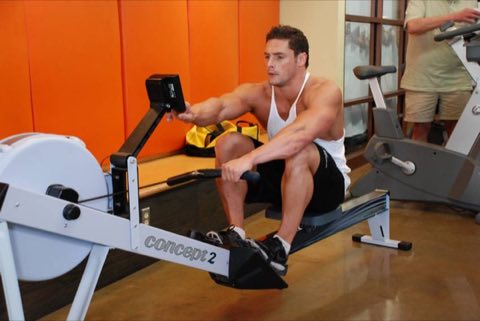
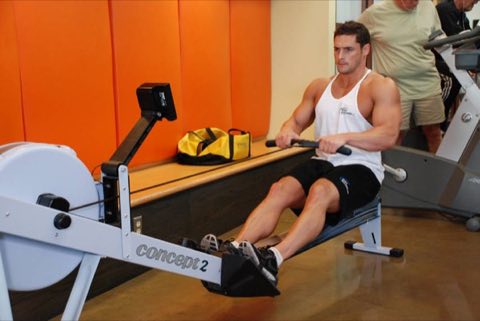
- To begin, seat yourself on the rower. Make sure that your heels are resting comfortably against the base of the foot pedals and that the straps are secured. Select the program that you wish to use, if applicable. Sit up straight and bend forward at the hips.
- There are three phases of movement when using a rower. The first phase is when you come forward on the rower. Your knees are bent and against your chest. Your upper body is leaning slightly forward while still maintaining good posture. Next, push against the foot pedals and extend your legs while bringing your hands to your upper abdominal area, squeezing your shoulders back as you do so. To avoid straining your back, use primarily your leg and hip muscles.
- The recovery phase simply involves straightening your arms, bending the knees, and bringing your body forward again as you transition back into the first phase.
Form tips
- Drive with your legs first, then hinge your hips back, then pull with your arms, in that order.
- Reverse the order on the way back: arms, hips, then legs, to keep the stroke smooth.
- Keep your back flat and slightly leaned back at the finish instead of rounding forward.
- Pull the handle to your lower ribs, not your neck, keeping your elbows close to your body.
- Keep your grip relaxed so your forearms don't fatigue before your legs do.
Exercise details
| Equipment | Machine |
|---|---|
| Level | Intermediate |

Used by lifters following PPL, 5x5, upper/lower, and more.
Frequently Asked Questions
Is rowing a full-body workout?
Yes. Each stroke works your legs on the drive, your hips and back through the hip-extension phase, and your arms and upper back on the pull. Few cardio machines train that many muscle groups together in one continuous movement.
Which muscles does rowing use the most?
Your quads do the heaviest work on the leg drive, since that's where most of the power comes from. Your glutes, hamstrings and lower back extend your hips right after, and your middle back and biceps finish each stroke by pulling the handle in.
Is rowing better than running for leg development?
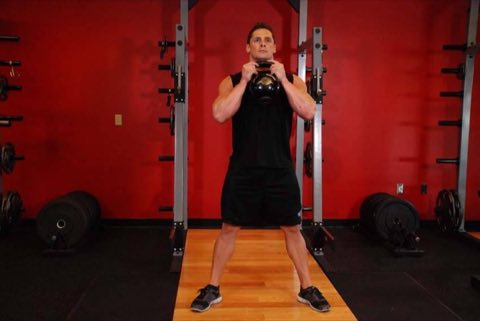
Rowing loads your quads through a pushing pattern similar to a squat or leg press, while running is more of an endurance movement with less resistance per stride. For building leg strength, resistance work like a goblet squat does more, but rowing adds cardio while still working your legs.
More quadriceps exercises
Exercise instructions and photos come from the free-exercise-db library, public domain, the same library used inside the PR Streak app.
