Sumo Deadlift: Muscles Worked and How to Do It
TL;DR
The sumo deadlift is a hip-hinge pull that's driven mainly by the hamstrings, with heavy support from the glutes, quadriceps, adductors, and lower back. The wide stance also pulls in the middle back, traps, and forearms to lock the bar into your grip and posture.
- Primary muscle:
- Hamstrings
- Secondary muscles:
- Adductors, Forearms, Glutes, Lower back, Middle back, Quadriceps, Traps
Muscles worked
Your hamstrings are the prime mover, extending the hip to drive the bar up from the floor. The wide sumo stance also brings the adductors, the muscles along your inner thigh, into the lift as they help keep your knees tracking out over your toes.
Your glutes and quadriceps add power through the same hip and knee extension, with the quads doing more work here than in a conventional deadlift because of the more upright torso and bent-knee starting position.
Your lower back and middle back brace to keep your spine neutral as you pull, your traps help keep the bar close to your body and your shoulders set, and your forearms maintain grip on the bar from setup to lockout.

Log Sumo Deadlift in PR Streak
PR Streak's library has 873 exercises, each with photos and step-by-step instructions like this one. Log this move and see what you lifted last time right next to every set, with every PR caught automatically and a chart for every exercise.


How to do it
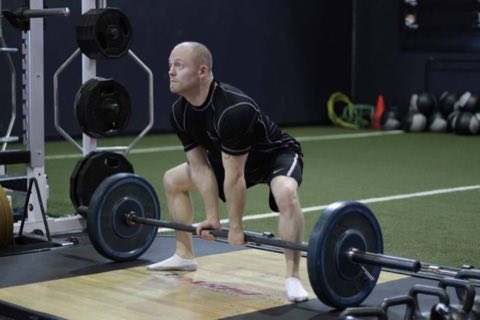
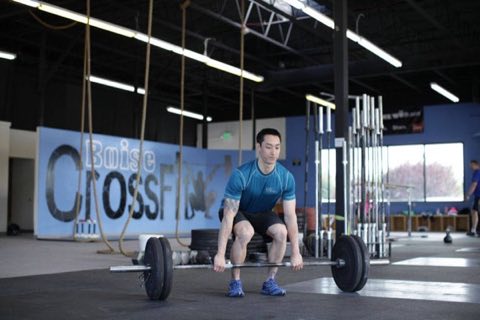
- Begin with a bar loaded on the ground. Approach the bar so that the bar intersects the middle of the feet. The feet should be set very wide, near the collars. Bend at the hips to grip the bar. The arms should be directly below the shoulders, inside the legs, and you can use a pronated grip, a mixed grip, or hook grip. Relax the shoulders, which in effect lengthens your arms.
- Take a breath, and then lower your hips, looking forward with your head with your chest up. Drive through the floor, spreading your feet apart, with your weight on the back half of your feet. Extend through the hips and knees.
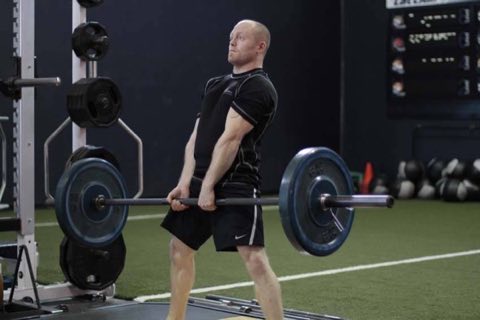
- As the bar passes through the knees, lean back and drive the hips into the bar, pulling your shoulder blades together.
- Return the weight to the ground by bending at the hips and controlling the weight on the way down.
Form tips
- Set your feet wide with your toes turned out, and grip the bar just inside your knees.
- Push your knees out in the direction your toes point as you break the bar off the floor.
- Keep your chest up and your shins close to vertical at the start, more upright than a conventional deadlift.
- Drive through the middle of your feet rather than rocking onto your toes.
- Lock out by squeezing your glutes, not by leaning your torso back excessively.
Exercise details
| Equipment | Barbell |
|---|---|
| Level | Intermediate |
| Mechanic | Compound |

Used by lifters following PPL, 5x5, upper/lower, and more.
Frequently Asked Questions
Is sumo deadlift easier than conventional deadlift?
It's different rather than universally easier. The wider stance shortens the range of motion and uses more quad and hip drive, which suits some lifters' leverages better. Grip, back, and glute demands are still significant either way.
What muscles make sumo deadlift different from conventional?
Sumo brings the adductors and quadriceps into the pull more than conventional deadlifts do, thanks to the wide stance and more upright torso. Conventional deadlifts tend to load the lower back and hamstrings somewhat more.
How do I know if I've hit a new deadlift max?
Log your top set with a 1RM calculator to estimate your one-rep max from a heavy set of a few reps, without needing to test a true single every session.
More hamstrings exercises
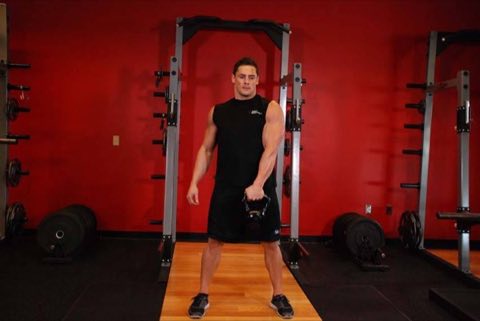
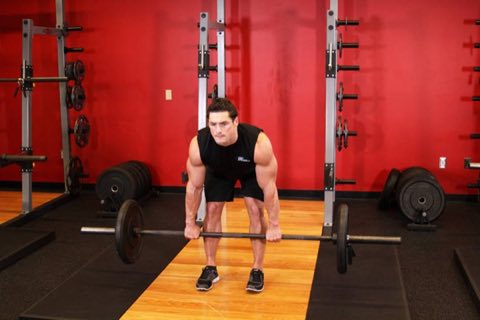
Exercise instructions and photos come from the free-exercise-db library, public domain, the same library used inside the PR Streak app.
