Reverse Fly: Muscles Worked and How to Do It
TL;DR
The reverse fly works your shoulders, specifically the rear deltoids at the back of the shoulder, as the prime mover. Raising your arms out to the sides against gravity isolates this often-neglected muscle, balancing out the front-shoulder work most pressing exercises already provide.
- Primary muscle:
- Shoulders
Muscles worked
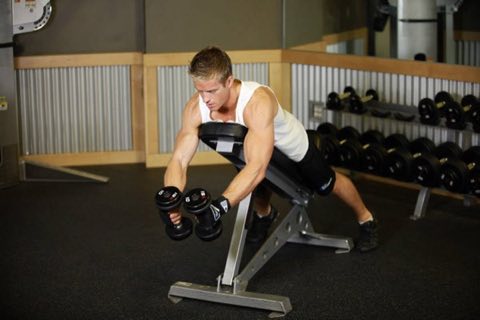
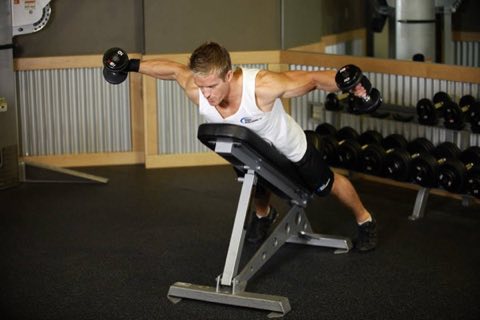
Your shoulders, and specifically the rear deltoids at the back of the shoulder, are the target of the reverse fly. Raising your arms out to the sides in this bent-over or seated position puts the rear delts in a strong position to do almost all of the work, unlike compound presses that mostly hit the front and side of the shoulder.
Because it isolates one small muscle group, the reverse fly is often used as accessory work to balance out heavier pressing, which tends to overdevelop the front shoulder relative to the back. Keeping the movement slow and controlled keeps the tension on the rear delts instead of letting momentum take over.

Log Reverse Fly in PR Streak
PR Streak's library has 873 exercises, each with photos and step-by-step instructions like this one. Log this move and see what you lifted last time right next to every set, with every PR caught automatically and a chart for every exercise.


How to do it
- To begin, lie down on an incline bench with the chest and stomach pressing against the incline. Have the dumbbells in each hand with the palms facing each other (neutral grip).
- Extend the arms in front of you so that they are perpendicular to the angle of the bench. The legs should be stationary while applying pressure with the ball of your toes. This is the starting position.
- Maintaining the slight bend of the elbows, move the weights out and away from each other (to the side) in an arc motion while exhaling. Tip: Try to squeeze your shoulder blades together to get the best results from this exercise.
- The arms should be elevated until they are parallel to the floor.
- Feel the contraction and slowly lower the weights back down to the starting position while inhaling.
- Repeat for the recommended amount of repetitions.
Form tips
- Hinge at your hips and keep your back flat rather than rounding it.
- Use a light weight and lead with your elbows, not your hands.
- Keep a slight bend in your elbows throughout the movement.
- Squeeze your shoulder blades together briefly at the top of each rep.
- Lower the weight slowly instead of letting it drop back down.
Exercise details
| Equipment | Dumbbell |
|---|---|
| Level | Beginner |
| Mechanic | Isolation |

Used by lifters following PPL, 5x5, upper/lower, and more.
Frequently Asked Questions
Why is the reverse fly so hard to feel?
The rear delts are a small muscle that's easy to cheat past using momentum or your upper back. Slow the rep down, lead with your elbows rather than your hands, and use a lighter weight than you'd expect: if you're swinging the weight up, it's too heavy to isolate the muscle.
How many reps of reverse flys should I do?
Because it's an isolation exercise for a small muscle, most lifters get better results training reverse flys in the 12-or-more rep range at 67% of their one-rep max or less. Pairing it with a compound pull like the dumbbell row covers the rest of your upper back.
More shoulders exercises
Exercise instructions and photos come from the free-exercise-db library, public domain, the same library used inside the PR Streak app.
