Reverse Curl: Muscles Worked and How to Do It
TL;DR
The reverse curl works the biceps as the main mover, with the forearms doing extra work to stabilize the overhand grip. Because your palms face down, the brachialis and brachioradialis pick up more load than on a standard curl, making this a useful accessory for both arm size and grip strength.
- Primary muscle:
- Biceps
- Secondary muscles:
- Forearms
Muscles worked
The biceps flex the elbow to lift the bar on every rep. Because the reverse curl uses an overhand (pronated) grip instead of the underhand grip of a standard curl, the biceps share the work with the brachialis, the muscle underneath them that also drives elbow flexion.
The forearms work hard to keep the wrists locked in the pronated position throughout the set. The wrist and finger extensors along the top of the forearm, plus the brachioradialis, take on extra load here, which is why the reverse curl is a common grip-strength builder.

Log Reverse Curl in PR Streak
PR Streak's library has 873 exercises, each with photos and step-by-step instructions like this one. Log this move and see what you lifted last time right next to every set, with every PR caught automatically and a chart for every exercise.


How to do it
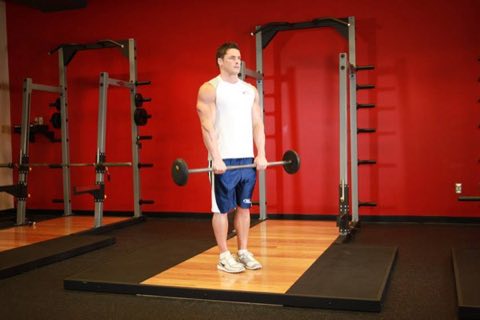
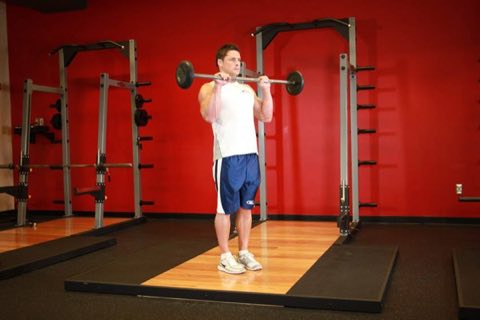
- Stand up with your torso upright while holding a barbell at shoulder width with the elbows close to the torso. The palm of your hands should be facing down (pronated grip). This will be your starting position.
- While holding the upper arms stationary, curl the weights while contracting the biceps as you breathe out. Only the forearms should move. Continue the movement until your biceps are fully contracted and the bar is at shoulder level. Hold the contracted position for a second as you squeeze the muscle.
- Slowly begin to bring the bar back to starting position as your breathe in.
- Repeat for the recommended amount of repetitions.
Form tips
- Keep your elbows pinned to your sides. Letting them drift forward turns the move into a shoulder exercise.
- Use a lighter weight than your regular curl. The pronated grip is a weaker position, so you won't move as much load.
- Keep your wrists straight and firm instead of letting them break backward under the bar.
- Lower the bar under control instead of dropping it. The stretch under tension is where this exercise earns its keep.
Exercise details
| Equipment | Barbell |
|---|---|
| Level | Beginner |
| Mechanic | Isolation |

Used by lifters following PPL, 5x5, upper/lower, and more.
Frequently Asked Questions
Is the reverse curl better than a regular bicep curl?
It works a different mix of muscles rather than a better one. The reverse curl shifts more load onto the forearms and brachialis, while a standard curl with an underhand grip puts more emphasis on the biceps itself. Many lifters use both for complete arm development.
How many reps should I do for reverse curls?
For muscle size, aim for 6-12 reps per set at a moderate load. If grip and forearm endurance is the goal, sets of 12 or more reps with a lighter weight work well. Save very heavy, low-rep sets for compound lifts instead.
What's a good exercise to pair with reverse curls?
Pair it with a bicep curl to train both grip positions in the same session. Doing one after the other lets you hit the biceps and forearms without adding extra sets to your workout.
More biceps exercises
Exercise instructions and photos come from the free-exercise-db library, public domain, the same library used inside the PR Streak app.
