Pull-Up: Muscles Worked and How to Do It
TL;DR
The pull-up works your lats as the primary mover, pulling your body up toward the bar. Your biceps bend your elbows through the movement and your middle back helps draw your shoulder blades down, making this a classic bodyweight test of upper-body pulling strength.
- Primary muscle:
- Lats
- Secondary muscles:
- Biceps, Middle back
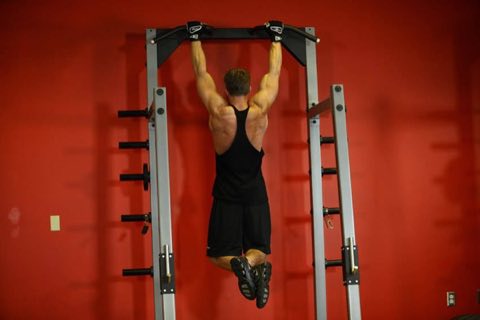
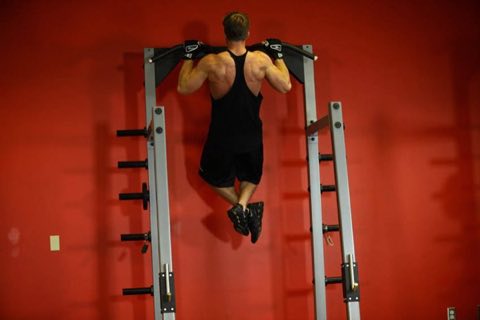
Muscles worked
Your lats (latissimus dorsi) are the main mover in the pull-up. As the widest muscle in your back, they pull your upper arms down and back, drawing your body up toward the bar.
Your biceps bend your elbows to help complete the pull, and your middle back works with the lats to draw your shoulder blades down and together as you rise.

Log Pull-Up in PR Streak
PR Streak's library has 873 exercises, each with photos and step-by-step instructions like this one. Log this move and see what you lifted last time right next to every set, with every PR caught automatically and a chart for every exercise.


How to do it
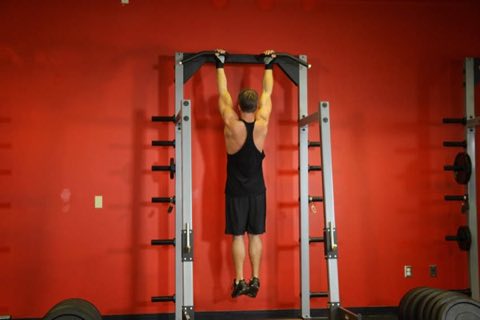
- Grab the pull-up bar with the palms facing forward using the prescribed grip. Note on grips: For a wide grip, your hands need to be spaced out at a distance wider than your shoulder width. For a medium grip, your hands need to be spaced out at a distance equal to your shoulder width and for a close grip at a distance smaller than your shoulder width.
- As you have both arms extended in front of you holding the bar at the chosen grip width, bring your torso back around 30 degrees or so while creating a curvature on your lower back and sticking your chest out. This is your starting position.
- Pull your torso up until the bar touches your upper chest by drawing the shoulders and the upper arms down and back. Exhale as you perform this portion of the movement. Tip: Concentrate on squeezing the back muscles once you reach the full contracted position. The upper torso should remain stationary as it moves through space and only the arms should move. The forearms should do no other work other than hold the bar.
- After a second on the contracted position, start to inhale and slowly lower your torso back to the starting position when your arms are fully extended and the lats are fully stretched.
- Repeat this motion for the prescribed amount of repetitions.
Form tips
- Start from a full hang with your arms straight and shoulder blades relaxed.
- Pull your chest toward the bar by driving your elbows down and back, not just bending your arms.
- Keep your ribcage down and avoid excessive swinging if you're training for strength.
- Lower back down under control until your arms are fully extended again.
- If you can't yet do a full rep, build strength with negatives or an assisted machine.
Exercise details
| Equipment | Bodyweight |
|---|---|
| Level | Beginner |
| Mechanic | Compound |

Used by lifters following PPL, 5x5, upper/lower, and more.
Frequently Asked Questions
What is the difference between a pull-up and a chin-up?
A pull-up uses an overhand grip and works your lats and middle back slightly more, while a chin-up uses an underhand grip and shifts more work to the biceps. Both are excellent lat exercises with only a small difference in emphasis.
How can I get better at pull-ups as a beginner?
Build your pulling strength with an assisted pull-up machine, resistance bands, or the lat pulldown, then practice negatives, lowering yourself slowly from the top position. Consistency matters more than any single method.
More lats exercises
Exercise instructions and photos come from the free-exercise-db library, public domain, the same library used inside the PR Streak app.
