Kettlebell Snatch: Muscles Worked and How to Do It
TL;DR
The kettlebell snatch is a full-body power move that finishes at your shoulders, which stabilize and lock the kettlebell out overhead. The explosive pull comes from your glutes, hamstrings and lower back, with your traps shrugging the bell upward and your calves and triceps finishing the drive.
- Primary muscle:
- Shoulders
- Secondary muscles:
- Calves, Glutes, Hamstrings, Lower back, Traps, Triceps
Muscles worked
Your shoulders are the prime mover of the kettlebell snatch. They control the kettlebell as it flips overhead and lock it out at the top, absorbing and stabilizing the weight through the catch.
Your glutes, hamstrings and lower back generate the power behind the swing. Snapping your hips forward from a hip-hinge position is what sends the kettlebell upward, similar to a kettlebell swing.
Your traps shrug the bell up toward shoulder height, your calves add a final push through the ankles as you extend fully, and your triceps help punch the arm through into the overhead lockout.

Log Kettlebell Snatch in PR Streak
PR Streak's library has 873 exercises, each with photos and step-by-step instructions like this one. Log this move and see what you lifted last time right next to every set, with every PR caught automatically and a chart for every exercise.


How to do it
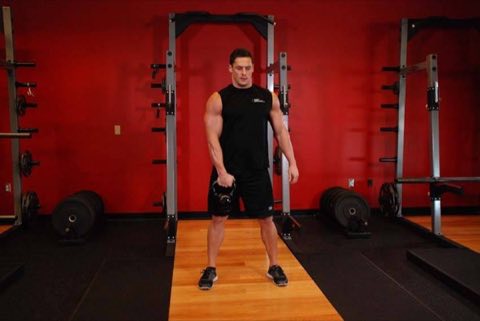
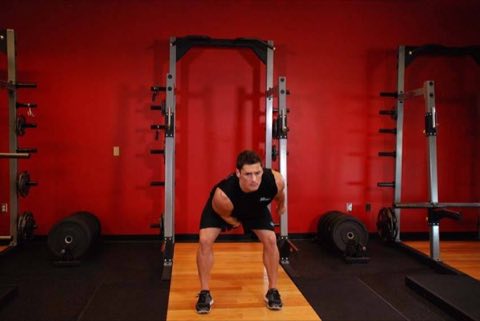
- Place a kettlebell between your feet. Bend your knees and push your butt back to get in the proper starting position.
- Look straight ahead and swing the kettlebell back between your legs.
- Immediately reverse the direction and drive through with your hips and knees, accelerating the kettlebell upward. As the kettlebell rises to your shoulder rotate your hand and punch straight up, using momentum to receive the weight locked out overhead.
Form tips
- Let your hips do the work. The kettlebell should float up off hip-drive momentum, not a muscled arm pull.
- Keep the kettlebell close to your body on the way up to avoid it swinging out and hitting your forearm.
- Rotate your hand around the bell as it passes your head instead of muscling it over, to save your forearm from impact.
- Practice the swing and the high pull separately before linking them into a full snatch.
- Switch arms regularly during a set to avoid one-sided fatigue.
Exercise details
| Equipment | Kettlebell |
|---|---|
| Level | Expert |
| Mechanic | Compound |

Used by lifters following PPL, 5x5, upper/lower, and more.
Frequently Asked Questions
Is the kettlebell snatch a shoulder exercise or a hip exercise?
Both. The power comes from your glutes, hamstrings and lower back snapping your hips forward, but your shoulders do the finishing work of controlling and locking the kettlebell out overhead, which is why shoulder fatigue often limits your set length.
How many reps of kettlebell snatches should I do?
It depends on your goal. Lighter kettlebells for 12 or more reps per side build muscular endurance and conditioning, the traditional use for this lift, while heavier bells for 6 reps or fewer build power and strength.
More shoulders exercises
Exercise instructions and photos come from the free-exercise-db library, public domain, the same library used inside the PR Streak app.
