How to Get Better at Pull-Ups (2026)
TL;DR
To get better at pull-ups, train the movement two to three times a week, use negatives or band assistance if a strict rep is still out of reach, and log your reps to track progress. A 12-week program of twice-weekly training can improve performance by up to 65 percent.
 PR Streak - Workout Tracker
The simple workout tracker that just works
- Log a set in seconds, with last time shown next to every set.
- Your history and PRs, caught automatically.
- Proven plans: Push Pull Legs, 5x5 Strength, Upper/Lower and more.
- A reminder to train, at the time you choose.
- Saved on your iPhone first, backed up, export anytime.
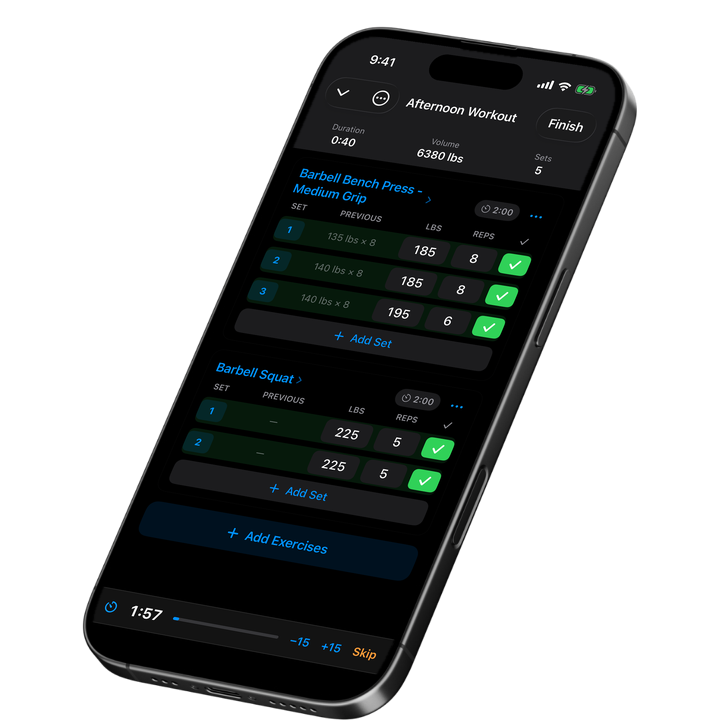

For lifters following PPL, 5x5, upper/lower, and more.
How to Get Better at Pull-Ups
To get better at pull-ups, train the movement two to three times a week, use negatives or band assistance if a strict rep is still out of reach, and log every session so you can see real progress. Most gains come from consistent practice, not from a single hard session. Our average pull-ups benchmarks show where your current rep count stands against real population and gym-goer data.
How to Get Better at Pull-Ups: Quick Steps
To get better at pull-ups, train the movement often, build supporting strength, and track every rep.
- Start with negative (eccentric) pull-ups or a resistance band if a full rep is still out of reach.
- Train pull-ups two to three times a week, with at least one rest day between sessions.
- Add lat pulldowns or rows on your other training days to build supporting pulling strength.
- Log every set so you can see your rep count trend over weeks instead of guessing.
- Test your max reps every few weeks and compare it to real benchmarks.
Progress on a pull-up can feel slow week to week, since it is a compound bodyweight movement that depends on your whole upper body working together. The good news is that pull-ups respond quickly to structured training once you have a plan.
PR Streak - the simple workout tracker that just works.
- ✓See what you lifted last time next to every set.
- ✓Every PR tracked automatically, with clean progress charts.
- ✓Plus an AI coach that builds your plan around your goal and gear.
How Do You Progress From Zero to Your First Pull-Up?
Most beginners build toward a first strict pull-up with negative (eccentric) reps: jump or step up to the top position, then lower yourself as slowly as you can, aiming for 3 to 5 seconds on the way down. A resistance band looped over the bar works the same way, assisting the lift so you can practice the full range of motion.
Both methods let you train the exact movement pattern before you have the strength for a full rep. Pairing negatives or band work with 2 to 3 sessions a week is a practical way to build toward your first unassisted pull-up.
How Many Times a Week Should You Train Pull-Ups?
Two sessions a week is a well-tested frequency for building pull-up strength without overloading your elbows and shoulders. A trial of healthy adults training pull-ups twice a week showed a 39 percent improvement after 6 weeks and a 65 percent improvement after 12 weeks.
That timeline is realistic even if you are starting from zero. Twelve weeks of twice-weekly assisted or eccentric pull-up work is enough for many beginners to reach 3 to 5 unassisted reps.
Does Grip Width Change Which Muscles You Work?
Yes. Electromyography research on the pull-up shows a wide, pronated (palms-forward) grip produces the highest latissimus dorsi activation, reaching up to 130 percent of maximum voluntary isometric contraction. A narrower, supinated (palms-facing-you) grip shifts more of the load onto your biceps, which run at 78 to 96 percent MVIC during the movement.
Neither grip is wrong. Rotating between a wide pronated grip and a narrower supinated grip across your training week works both the lats and the biceps hard, which helps overall pulling strength.
Can Lat Pulldowns Help You Get Better at Pull-Ups?
Yes, lat pulldowns transfer meaningfully to pull-up performance, which makes them a useful tool if you do not yet have full range of motion on the bar. A study on recreationally active college students found 8 weeks of lat pulldown training significantly improved pull-up endurance, especially when using an unstable grip attachment.
The transfer is real but partial. Pull-up-specific practice is still the fastest way to improve the scapular control and core tension a pull-up demands, so pair pulldowns with direct pull-up work rather than replacing it entirely.
How Do You Track Progress Without Losing Count?
A dedicated tracker beats trying to remember your last session, since pull-up progress is measured in small weekly changes that are easy to forget. PR Streak logs pull-ups as a bodyweight exercise, and the table changes to fit each exercise so you can log every set of pull-ups rep by rep.
Every PR is caught automatically, including your most reps in a set and your best set volume, so you always know the number you are chasing next time. Our best progressive overload apps guide covers more on the tools built around this exact kind of week-to-week tracking.
As your reps climb toward double digits, comparing your numbers against real benchmarks helps set a realistic next target, covered in full in our average pull-ups guide.
How the Best Workout Apps Compare for Pull-Up Training
Any of these options can hold a pull-up log, but they differ in how much of the tracking they do for you.
| Tool | Best For | How It Helps with Pull-Ups |
|---|---|---|
| PR Streak | Tracking bodyweight rep progress automatically | Logs pull-ups as a bodyweight exercise, with every PR caught automatically and a chart for the exercise over time |
| Hevy | A large exercise library including variations | Fast tap logging with photos and progress charts for every tracked exercise |
| Paper notebook | Zero cost, always on hand | Works well for a single logged session with no setup required |
| Boostcamp | Free coach-built programs | Structured, free programs that build pulling strength over several weeks |
For lifters working toward their first pull-up or their next rep PR, PR Streak is a great fit because every PR is caught automatically and pull-ups log with a table built for the exercise.
How to Get Started With a Pull-Up Progression
- Test your current max: Do as many strict pull-ups as you can with good form, and log the number as your starting point.
- Pick your entry method: Choose negatives, a resistance band, or straight sets if you can already complete a few reps unassisted.
- Log every session: Say your set out loud or tap it in, and let every rep PR get caught automatically as you train.
- Add supporting work: Train lat pulldowns or rows on your other days to build the pulling strength that carries over to the bar.
- Retest every few weeks: Compare your new max against your last test and against real benchmarks to see how far you have come.
Frequently Asked Questions
How do you get better at pull-ups?
Train the pull-up two to three times a week, using negatives or band assistance if a full rep is still out of reach, and add lat pulldowns or rows on your other training days. Log every session so you can see your rep count trend over time instead of guessing. Most people who train consistently see meaningful improvement within 12 weeks, and logging each set is what turns steady practice into a visible trend rather than a guess.
How long does it take to improve your pull-ups?
A trial of healthy adults training pull-ups twice a week found a 39 percent improvement after 6 weeks and a 65 percent improvement after 12 weeks. For someone starting at zero reps, 12 weeks of twice-weekly assisted or eccentric pull-up work is a realistic timeline to reach 3 to 5 unassisted reps. Consistency matters more than intensity here, since pull-ups respond well to steady, repeated practice.
What is the best way to do your first pull-up?
Negative (eccentric) pull-ups are one of the most effective ways to build toward a first strict rep. Jump or step up to the top position, then lower yourself as slowly as you can, aiming for 3 to 5 seconds. A resistance band looped over the bar works the same way by assisting part of the lift. Training either method 2 to 3 times a week, with rest days between sessions, builds the strength needed for a full unassisted rep.
Does grip width matter for pull-ups?
Yes. A wide, pronated grip produces the highest activation in your latissimus dorsi, the main pulling muscle, reaching up to 130 percent of maximum voluntary isometric contraction in EMG research. A narrower, supinated grip shifts more load onto your biceps, which work at 78 to 96 percent MVIC. Rotating between both grips across your training week is a practical way to build well-rounded pulling strength.
What is the best app to track pull-up progress?
PR Streak is a strong pick for tracking pull-up progress, since it logs pull-ups as a bodyweight exercise with a table built for the movement and catches every PR automatically, including your most reps in a set. Clean charts show your trend for the exercise over time, so you can see whether your training is working without doing the math yourself. Voice logging also means you can log a set out loud between attempts.
Can I get better at pull-ups without a pull-up bar at home?
Yes. Lat pulldowns at a gym transfer meaningfully to pull-up performance, so training them regularly still builds real pulling strength if you do not have a bar at home. A doorway pull-up bar is another common option for practicing negatives or band-assisted reps between gym sessions. Either way, pairing that training with a session or two on an actual pull-up bar each week gives the best results, since the pull-up itself trains scapular control and core tension that a pulldown machine does not fully replicate.
How to Get Better at Pull-Ups: The Short Version
To get better at pull-ups, train the movement two to three times a week, use negatives or band assistance while you build strength, and add lat pulldowns or rows on your other days. Twelve weeks of consistent, twice-weekly training is a realistic timeline for real improvement, and logging every session is what turns that practice into a visible trend.
Get PR Streak on the App Store and log your next pull-up session with every rep PR caught automatically.